The furnace starts again, but the house still hasn’t reached the temperature on the thermostat. Perhaps it shuts down after a few minutes. Perhaps this is the third service call since the weather turned cold. At some point, getting the heat back on becomes only part of the concern. You also want to know whether you can count on it staying on.
A furnace repair can be a sensible investment when it corrects a specific problem and the remaining equipment is in good condition. Replacement becomes more attractive when the furnace needs several expensive repairs, the right parts are unavailable, or an assessment shows the existing furnace can’t meet the home’s heating needs.
This guide explains how those situations differ, including when replacing a blower motor or heat exchanger can be worthwhile. It also covers what a new heating system would need to deliver for a Spokane household.
Sturm Heating & Air Conditioning provides furnace repair in Spokane, helping homeowners identify the problem before deciding how to address it.
Why Does the Furnace Keep Shutting Off?
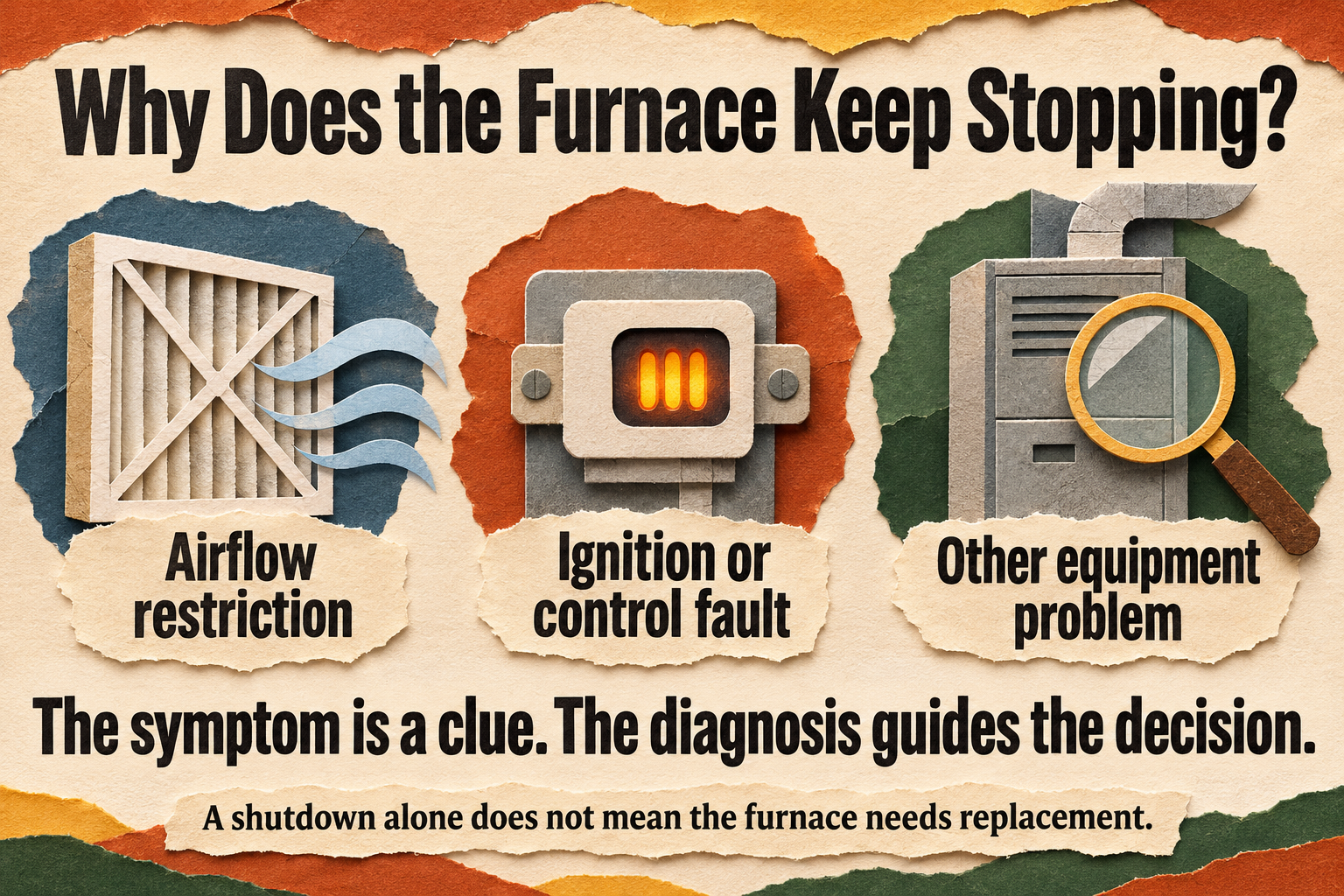
A furnace that repeatedly starts and stops before the house warms up may be short cycling. While this pattern can describe how the furnace behaves, it does not identify what is actually failing.
For example, restricted airflow can cause the furnace to overheat. A safety control then shuts off the burners. Ignition or flame-sensing problems can also interrupt heating, but they require different corrective work. Carrier’s explanation of furnace short cycling describes several possible causes.
The distinction matters when a problem keeps returning. Several visits for the same shutdown may mean the original cause has not been fully resolved. Several visits for unrelated component failures tell a different story about the furnace’s condition.
A clear diagnosis should explain why heating stopped and whether the proposed repair addresses that cause. If another known problem would remain afterward, that belongs in the discussion too.
A gas odor or carbon monoxide alarm requires immediate action. Leave the home and call 911 from outside. If you are an Avista customer, also report a suspected gas leak to Avista at 800-227-9187. Stay outside until emergency responders say it is safe to return. Carbon monoxide has no smell, so the absence of a gas odor does not establish that the home is safe. Check Avista’s safety guidance to better understand the differences between natural gas and carbon monoxide.
Is Replacing the Blower Motor Worth It?
The blower moves air through the furnace and into the duct system. If its motor fails, the furnace may be unable to deliver heat even when other components remain usable. Weak airflow alone, however, does not prove that the motor needs replacement. Filters, ducts, and controls can also affect air movement.
Once a motor failure is confirmed, the decision becomes more specific: how much will the complete repair cost, and what condition will the furnace be in afterward?
What Changes the Blower Motor Replacement Cost?
The correct motor depends on the furnace model and its controls. The repair can also involve related components, labor, and testing. If an airflow restriction or electrical fault contributed to the failure, correcting it may add to the work.
Warranty coverage can change the amount the homeowner pays. A covered motor may still involve labor or service charges, depending on the applicable terms. That is why the price of a replacement motor found online is usually not the same as an installed repair estimate.
What Else Is Wrong With the Furnace?
Consider two hypothetical situations.
In the first, a furnace has heated the home consistently, and an inspection finds an isolated motor failure. The other major components remain serviceable. Repair may preserve equipment that still meets the household’s needs.
In the second, the motor has failed and the inspection also identifies a damaged heat exchanger. Replacing the motor alone would not make the furnace ready for service. The homeowner needs the total cost of resolving both problems before comparing that work with replacement.
A blower motor replacement can be worthwhile when the rest of the furnace is in good shape. If another major component is already failing, compare the cost of fixing both problems with the cost of a new furnace.
Should You Replace the Heat Exchanger or the Entire Furnace?
The heat exchanger transfers heat from combustion to the air circulated through the home while keeping combustion gases separated from that air. A crack or other confirmed damage can compromise that separation and requires professional attention.
This decision begins with safety. If a technician determines that the furnace is unsafe to operate, it should remain off until the problem has been properly corrected.
The next decision is whether to replace the heat exchanger or the entire furnace.
When Can Heat Exchanger Replacement Make Sense?
Replacing the heat exchanger may be reasonable when the correct replacement is available, the remaining furnace is in good condition, and warranty assistance makes the complete repair worthwhile.
An active heat exchanger warranty does not necessarily mean the entire job is free. Coverage depends on the equipment and the applicable terms. Some manufacturer programs also provide specific repair or replacement benefits, so the actual model needs to be checked.
A heat exchanger replacement estimate should distinguish the manufacturer’s contribution from the homeowner’s remaining cost. It should also include any related work needed to return the furnace to safe operation.
When Is Full Furnace Replacement More Reasonable?
A new furnace deserves closer consideration when heat exchanger replacement requires extensive work and other major components are also deteriorating. Difficulty obtaining the correct assembly can further limit the repair option.
Age helps put those findings in context. It cannot reveal the condition of a heat exchanger or establish how many useful heating seasons remain.
A recent repair also does not automatically make another repair worthwhile. Money already spent cannot be recovered by continuing to repair the same furnace. The decision now is what additional work would cost and what it would accomplish.
Will a New Furnace Fix a House That Stays Cold?
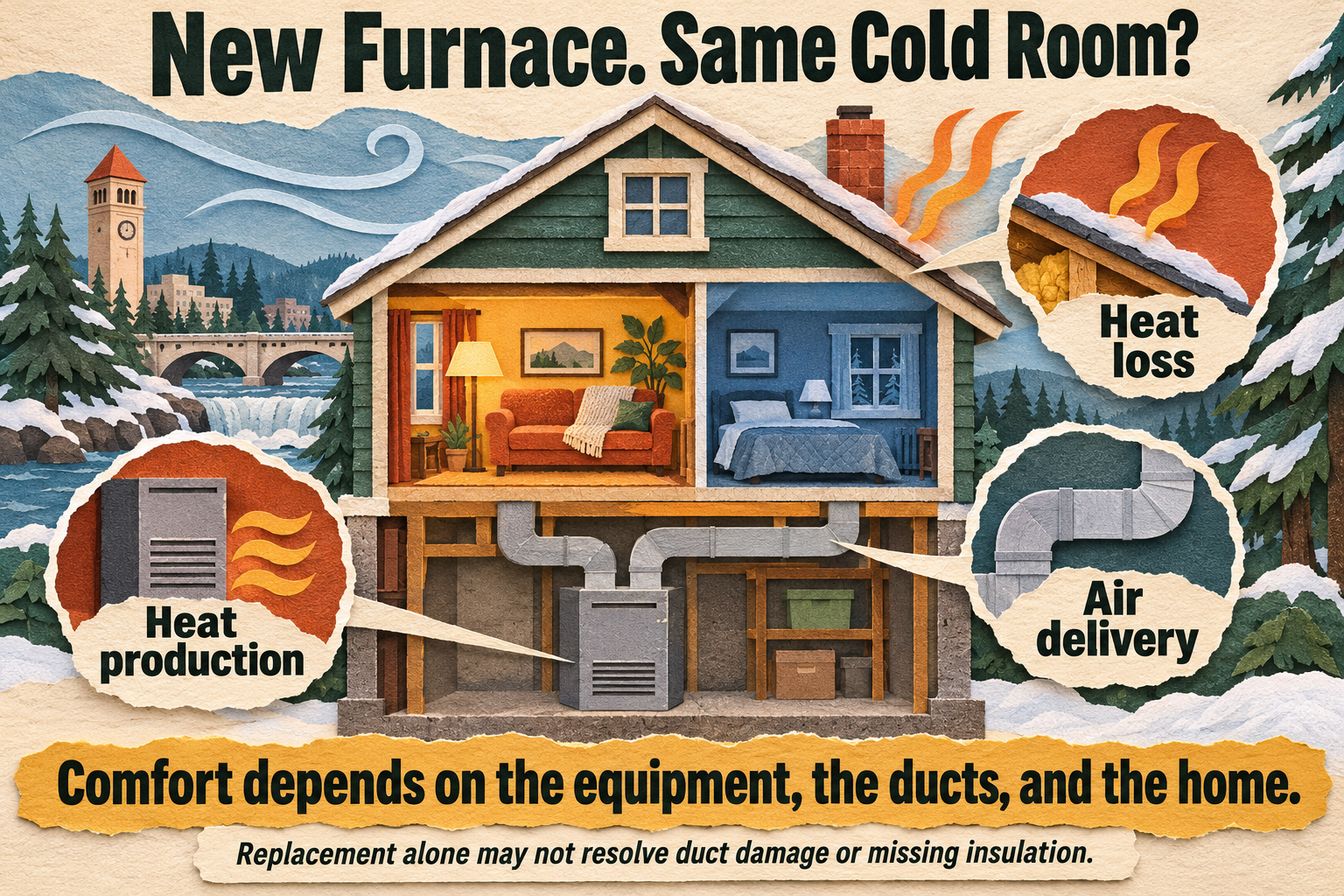
A furnace can operate while the home remains uncomfortable. The heating equipment, duct system, and building all affect the result.
One room may receive too little heated air because a duct is damaged or disconnected. Another may lose heat quickly through poorly insulated areas. Replacing the furnace without addressing those conditions can leave the homeowner with new equipment and the same cold room.
Sturm’s duct repair services address problems such as leaking joints, disconnected sections, and damaged ductwork. Its insulation services provide another way to investigate heat loss and comfort problems beyond the furnace.
The history of the complaint helps direct that assessment. A home that became cold after a sudden equipment failure presents a different problem from one with bedrooms that have been uncomfortable for years.
Would a Larger Furnace Help?
A larger furnace is not an automatic solution. Equipment capacity needs to match the home’s heating requirements and the airflow its ducts can support.
Oversized equipment can cycle too frequently. A heating-load calculation accounts for the building’s characteristics so equipment selection is based on the home rather than the size of the old furnace alone.
For a Spokane replacement project, the recommendation should explain how the selected equipment will meet the home’s needs during cold weather. If duct or insulation work is also needed, that work should be connected to the specific comfort problem.
What Could Replace Your Existing Furnace?
A furnace replacement project is an opportunity to consider how the home will be heated and cooled. The existing fuel supply, air conditioner, ducts, and electrical system all influence the available choices.
Another Furnace
A new furnace may be a practical choice when the household wants to retain its current source of heating.
The installation still needs to account for the home. Different equipment can require changes to connections, controls, or venting. A high-efficiency condensing furnace also produces water that needs an appropriate drainage arrangement.
Sturm’s furnace installation services include evaluating factors such as fuel access, the home’s layout, inulation, and heating needs.
A Heat Pump
A heat pump uses electricity to move heat into the home in winter and remove heat during summer. It can therefore provide both heating and air conditioning.
For Spokane homes, the selected model’s cold-weather heating output matters. The installation needs to account for how much heat the home requires at low outdoor temperatures and whether supplemental heating will be used. A general efficiency rating does not answer those questions by itself.
The existing air conditioner also affects the comparison. Replacing a furnace while keeping a serviceable AC is a different project from replacing both heating and cooling equipment. Sturm offers heat pump services for homeowners considering that alternative.
A Dual Fuel System
A dual fuel system combines a heat pump with a compatible fuel-burning furnace. Controls coordinate which equipment provides heat.
The heat pump can handle heating under selected conditions, with the furnace taking over when the system’s settings call for it. Both do not necessarily run together. Equipment performance, outdoor conditions, and fuel costs influence how the system should be configured.
This arrangement provides another option for a homeowner considering a heat pump while retaining furnace heating. Compatibility must be established; adding a heat pump is not simply a matter of connecting any outdoor unit to the existing furnace.
What Are You Paying for With Each Option?
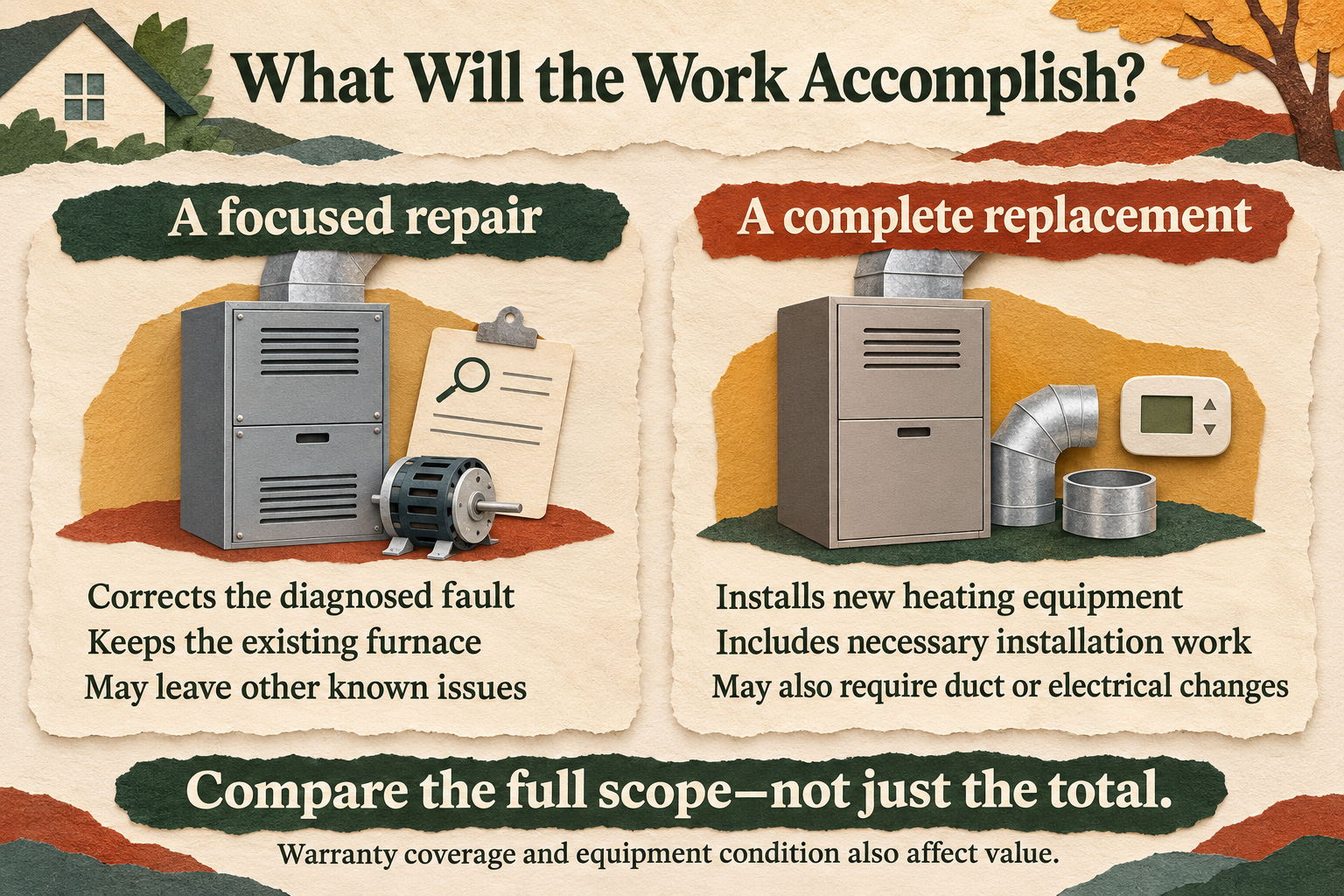
A repair estimate is easier to evaluate when it explains what will work afterward. A replacement proposal needs the same clarity. The following details make the comparison more meaningful:
| Consideration | What affects the decision |
|---|---|
| Complete repair cost | Diagnosis, replacement parts, related corrections, labor, and testing, after applicable coverage. |
| Problems that would remain | Other confirmed defects or comfort issues outside the repair. |
| Complete installation cost | New equipment, removal, connections, controls, and any necessary supporting work. |
| Warranty protection | The parts and labor coverage supplied with each option and the conditions that apply. |
| Future heating expenses | Expected equipment performance, household use, and the relevant energy rates. |
| Time without dependable heat | Availability of suitable repair parts and replacement equipment, along with scheduling. |
Compare the repair cost with the price of a new furnace, then consider what else may need work. A costly repair can be worth it if the rest of the furnace is in good shape. A cheaper repair may be poor value if another major component is already failing.
What Would Actually Lower Heating Costs?
Several factors affect whether replacement would reduce ongoing expenses:
- The current furnace’s condition: Correcting a fault may improve operation without replacing the equipment.
- How efficiently the new furnace uses fuel: A higher efficiency rating means the furnace uses less fuel to deliver the same amount of heat. Your actual savings depend on how much heat your home needs and what you pay for fuel.
- The home’s heat loss: Insulation and air leakage influence how much heat the system must supply.
- Energy prices: A switch between gas and electricity changes which rates drive heating costs.
- The heating arrangement: A heat pump comparison needs to include any supplemental heating and how often it is expected to operate.
Weather and thermostat settings also change energy use. A larger bill during a colder month does not, by itself, prove the furnace has become less efficient.
Any rebate deducted from a proposal needs to apply to the customer, selected equipment, and installation. Until eligibility and the amount are confirmed, the advertised maximum should not be treated as a guaranteed discount.
When replacement is the right fit, Sturm’s financing options can help homeowners plan for the investment.
Find Out If Your Furnace Is Worth Repairing
If your furnace keeps shutting off or struggles to heat your home, schedule a visit with Sturm Heating & Air Conditioning. We’ll find out what’s causing the problem, explain what a repair would fix, and tell you if other issues need attention. If replacement makes more sense, we’ll walk you through your options and what installation would involve.
Call (509) 215-9429 or request a furnace evaluation in Spokane.